
We have all experienced the sudden, frustrating wall of a creative rut. You sit at your desk, staring at a blank screen or an empty canvas, waiting for inspiration to strike, but the air feels stagnant. When we find ourselves trapped in these mental loops, our instinct is often to push harder, to force the brainstorm, drink more coffee, or stare at the problem for another hour. However, cognitive science suggests that the root of creative stagnation rarely lies in a lack of effort. Instead, it is frequently a symptom of an over-standardized life.
When you live a life built entirely out of templates, your brain learns to think in templates. From the mass-produced furniture in our offices to the algorithmically curated feeds on our phones, we are constantly consuming environments designed for the average person. While standardization offers convenience, it breeds cognitive passivity. The human brain is an incredibly adaptive organ; it thrives on pattern recognition. If its daily environment is entirely predictable, it switches to autopilot, conserving energy by running the same well-worn neural pathways over and over again.
To break this cycle, we have to look at the psychology of customization. Intentional customization is the act of stepping out of the role of a passive consumer and stepping into the role of an active creator within your own life. When you purposefully alter your physical surroundings, your daily rituals, or your personal style to reflect your specific internal landscape, you send a powerful signal to your subconscious. You are telling your brain that the world is malleable, that defaults are merely suggestions, and that you have the agency to reshape reality. This article explores how customizing five distinct pillars of your personal life can dismantle cognitive rigidity and build a sustainable engine for fresh, innovative thinking.
Reimagine Your Workspace to Break Cognitive Patterns

Audit Your Sensory Environment to Trigger New Ideas
The spaces where we work have a profound, often subconscious impact on the way we formulate ideas. A sterile, generic office environment signals to the brain that it needs to conform, leading to safe, sterile thinking. To cultivate true innovation, you must audit your physical environment and introduce customized elements that actively engage your senses. Sensory variety prevents cognitive numbness and keeps your mind agile throughout the long hours of a deep-work session.
When tailoring your workspace, look first to the surfaces that frame your movement. Your feet and hands are constantly sending tactile feedback to your nervous system. Standard office carpets or cold, uninviting linoleum offer nothing to spark the imagination. By deliberately selecting unique textures and structural elements, you can create distinct zones within a single room.
- Define Zones by Intention: Use distinct flooring textures to separate your analytical workstation from your creative brainstorming area. A soft, intricate texture underfoot signals to your brain that it is safe to relax, dream, and think divergently.
- Control Light Reflection: The way light bounces off your surroundings dictates your energy levels and focus. Matte finishes absorb chaos, while high-gloss or industrial treatments can reflect natural light throughout a dark studio, fundamentally altering the room’s energy and making it feel more expansive.
- Incorporate Storytelling Elements: Choose materials and colors that carry personal history or emotional resonance. When your eyes wander during a difficult problem, landing on a texture you actively chose—rather than a default finish—reanchors your focus.
For instance, using custom rugs to define a dedicated brainstorming zone can visually and texturally signal your brain that it is time to think outside the box. The sudden change in texture under your feet breaks the monotony of a long day. Similarly, an industrial, high-gloss floor coating in a studio space can reflect light differently, completely altering the energy of the room and preventing the mid-afternoon slump that kills original thought. By taking control of these structural foundations, you transform your office from a place where you merely execute tasks into an active incubator for fresh perspectives.
Cultivate Creativity Through Intentional Daily Curation
Turn Routine Touchpoints Into Tiny Acts of Self-Expression
Creativity is not a faucet that you can turn on only when you need to produce a major project; it is a muscle that must be conditioned through daily practice. One of the most effective ways to build this muscle is through the micro-decisions you make during your everyday routines. When we mindlessly accept the default settings of our daily objects, we train ourselves to accept status quo thinking. Conversely, turning routine touchpoints into deliberate choices keeps your creative instincts sharp.
Consider the objects you touch dozens of times a day—your keys, your wallet, or the digital interfaces you navigate. These items are often treated as pure utilities, chosen for convenience and forgotten. However, when you replace these generic objects with tailored items that require your input to exist, you practice the act of creation on a miniature scale.
- Upgrade Your Daily Carry: Swap out mass-produced utility items for pieces that possess weight, craftsmanship, or personal meaning. Touching a well-crafted object provides a brief moment of mindfulness in a chaotic day.
- Curate Your Digital Canvas: Your phone and computer screens are the portals through which you view the world. Customizing these spaces ensures that your digital first impression aligns with your intellectual goals rather than an algorithm’s agenda.
- Experiment Risk-Free: Use low-stakes personal projects to test out color palettes, layouts, and aesthetics that you might be too intimidated to try in your professional work.
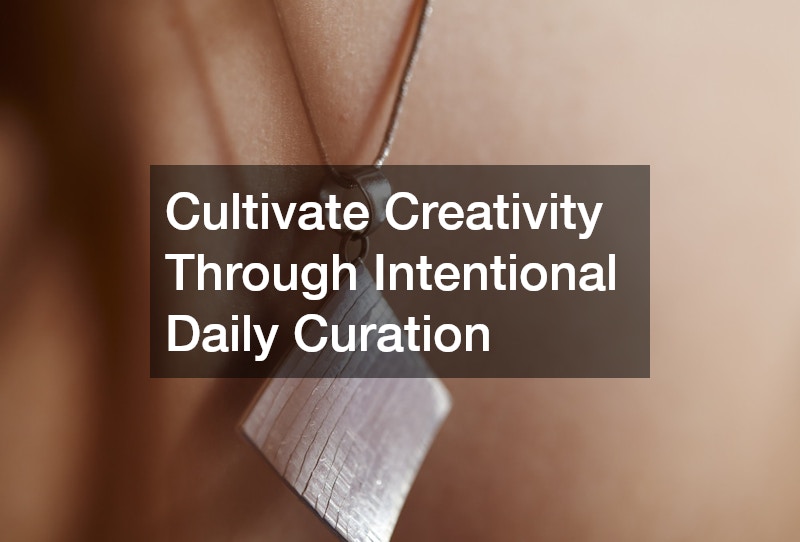
Even utilitarian items like custom metal keychains can serve as tactile reminders of your personal style every time you leave the house, grounding you in your identity before you face the world. On the digital side, treating your personal portfolio or blog’s website design as an evolving canvas allows you to experiment with layouts and typography risk-free. These small, low-stakes exercises in curation build up your creative confidence, proving to your subconscious that you are fully capable of designing a world that suits your vision.
Designing Restful Spaces for Subconscious Problem-Solving
Optimize Your Sanctuary for Incubation and Dream-State Thinking
Any psychologist studying creativity will emphasize the importance of the “incubation period.” This is the phase of the creative process where you stop consciously working on a problem and allow your subconscious mind to take over. History is filled with stories of scientists, writers, and inventors who found the solutions to their most complex dilemmas not at their desks, but in their dreams or during moments of deep rest. To facilitate this subconscious synthesis, your bedroom must be custom-tailored to promote restorative rest.
Most bedrooms are treated as afterthoughts, filled with mismatched furniture or cluttered with the remnants of the workday. This visual and mental noise triggers cortisol, the stress hormone, which actively blocks the brain’s ability to form novel connections during sleep. Customizing this sanctuary means stripping away anything that causes friction and replacing it with elements designed specifically for your sensory comfort.
- Eliminate Morning Decision Fatigue: Establish an organizational system that hides visual clutter. Knowing exactly where everything belongs saves precious mental energy during the first thirty minutes of your day.
- Tailor Your Tactile Comfort: The fabrics that touch your skin for eight hours a night should not be chosen at random. Select weights, weaves, and fibers that match your ideal sleep temperature to maximize REM sleep.
- Create a Transition Ritual: Design your sleeping space to visually signal the transition from the frantic energy of the day to the peaceful incubation of the night.
Investing in a custom-printed duvet cover featuring abstract art or calming textures can set the perfect visual tone for evening wind-downs, signaling to your brain that the time for structured logic has passed. Furthermore, working with a professional closet designer helps eliminate the morning decision fatigue that drains your creative energy before the day even starts. When your morning routine is smooth and beautiful, your brain enters the workday with its creative reserves fully intact, ready to tackle complex challenges with a fresh perspective.
Wearable Art as a Catalyst for Unconventional Thinking

Use Your Personal Style to Form New Neural Pathways
There is a fascinating psychological phenomenon known as enclothed cognition, which describes the systematic influence that clothes have on the wearer’s psychological processes. What we wear changes how we feel, how we act, and how we think. When you wear mass-market clothing that makes you look like everyone else, you subconsciously pressure yourself to think like everyone else. By introducing highly customized, unique pieces into your wardrobe, you grant yourself psychological permission to step outside societal templates.
Customizing your personal style is not about vanity; it is about identity construction. When you wear something that cannot be bought off a standard department store rack, you are making a statement to yourself and the world that you value originality. This shifts your self-perception, reinforcing the belief that you are an innovator who approaches life from a unique angle.
- Co-Create with Makers: Engage in the design process with independent artisans. This collaborative experience allows you to see how another creative professional translates abstract concepts into physical forms.
- Establish Wearable Anchors: Use specific, highly customized accessories as talismans for your creative mindset. Putting them on becomes a physical ritual that gets you into the zone.
- Spark Unconventional Conversations: Unique attire acts as a natural icebreaker, drawing in like-minded individuals and leading to unexpected collaborative opportunities.
Collaborating directly with independent jewelry designers allows you to participate in the creative process from sketch to final product, giving you a masterclass in design thinking. Ultimately, wearing custom designed jewelry serves as a wearable anchor, constantly reminding you of your own capacity to create unique value out of raw materials. When you walk into a room knowing that your physical presentation is an authentic expression of your internal mind, you carry yourself with a creative confidence that naturally opens doors to unconventional ideas.
The Creative Power of Deconstruction and Natural Spatial Design
Clear Out the Old to Make Room for Fresh Perspectives
To build something entirely new, you must often be willing to tear down what currently exists. This is true for outdated belief systems, stagnant careers, and physical spaces. Our environments can become stagnant over time, holding onto old energies and habits that no longer serve our creative evolution. Taking a radical approach to your physical environment through intentional deconstruction and spatial design can invite expansive, macro-level thinking back into your life.
When we feel stuck, it is often because our physical boundaries are too rigid. Breaking down walls, either literally or figuratively, allows us to see the bigger picture. Furthermore, once the old structures are cleared, we have the rare opportunity to align our spaces with the organic patterns of the natural world, a practice known to drastically lower stress and elevate problem-solving capacities.
- Embrace Radical Spatial Shifts: Do not just rearrange your furniture; completely reassess whether the current layout of your home supports your future self.
- Invite the Outdoors In: Design your window views and outdoor areas to feature natural elements. Looking at greenery or flowing water relaxes the prefrontal cortex, allowing insights to bubble up naturally.
- Prioritize Openness: Create physical pathways in your home that encourage movement. Walking through an open, fluid space mirrors the fluid movement of a nimble mind.
Sometimes a space requires radical demolition before it can be reborn into a functional studio that inspires your best work; the physical act of clearing out the debris can feel incredibly cathartic and liberating for your mind. Following that clearance, thoughtful landscape design creates a seamless transition between your indoor workspace and the organic inspiration of nature, ensuring that whenever you look up from your work, your eyes rest on a living canvas of growth and possibility.
The journey toward a highly creative life is not found in a single, massive transformation. Instead, it is built brick by brick through the intentional customization of your everyday world. By actively designing your workspace, your daily rituals, your sleeping sanctuary, your wardrobe, and your surrounding environment, you permanently disable the autopilot mode that keeps you trapped in uninspired routines. You transition from someone who merely consumes the world to someone who dynamically reshapes it. Stop settling for the default settings that have been handed to you by mass production. Take ownership of your environment, customize your personal life, and watch as your mind naturally expands to discover brilliant, original ideas.